Broken English, 2013, video excerpt, live performance at MAN – Art Museum of the Province of Nuoro.







Broken English, 2013, video excerpt, live performance at MAN – Art Museum of the Province of Nuoro.
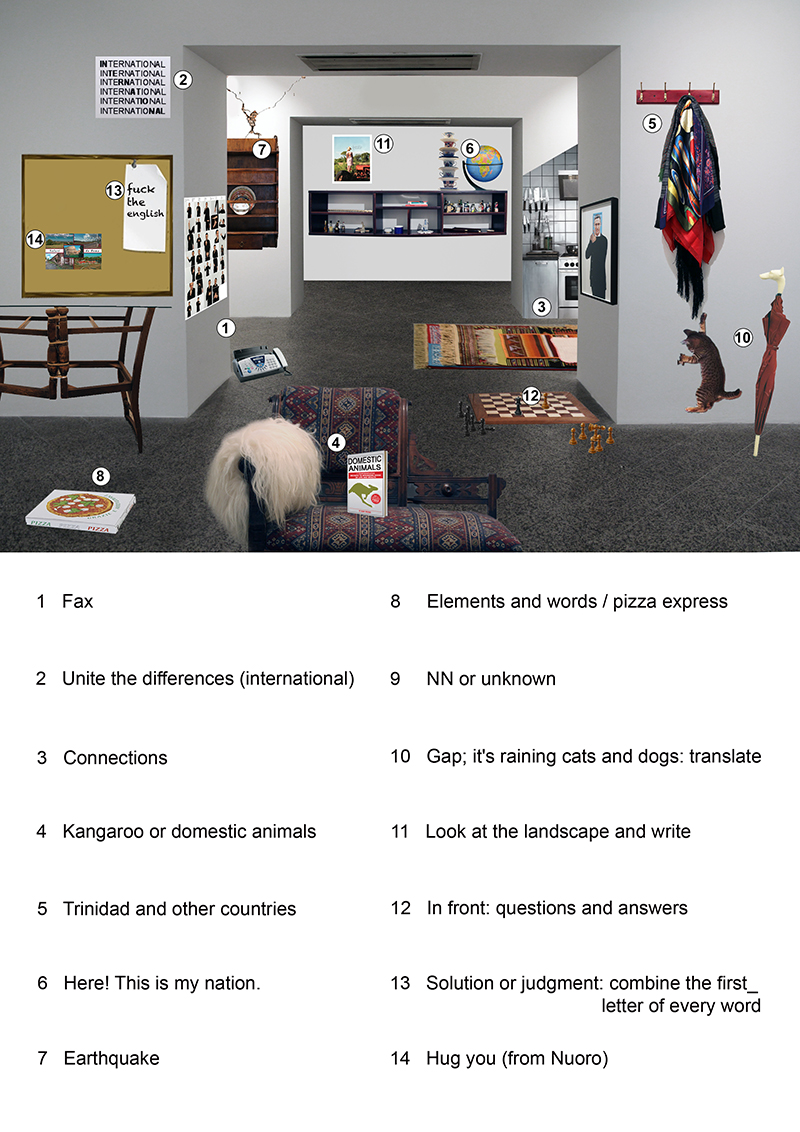
The title of the exhibition at MAN is “ Broken English ,” a term that refers to uncertain variants of the English language, ill-structured terminologies coined mostly by non-native speakers. In the project, these variants are transformed from simple linguistic elements into images, objects, sounds, videos, texts, installations and actions articulated within a multidisciplinary exhibition integrating linguistic issues (communications, contamination, dis-identity) with socio-economic ones. The project stems from some fundamental questions: Is a society with several languages and different forms of expression stronger and richer than a society with only one? Is there a possibility for the existence of a single world language, a single world market, or a single world currency? In addition to the identification of a series of significant linguistic episodes, the MAN exhibition reinterprets an important figure in 19th century Sardinian history, Welsh engineer Benjamin Piercy, who built the island’s first railway line. He lived for many years in Sardinia, where he came to own a number of estates, including Villa Piercy where he lived with his family surrounded by a magnificent park in the heart of Sardinia. Along with native species, specimens with more exotic origins still exist in the park: the greek fir, Caucasus fir, the Spanish fir, Himalayan cedar. In addition to plants, Piercy also imported animals to improve the local breeds of pig, sheep and goats, creating new and more resistant and profitable animals from these cross fertilizations. In the project, Piercy’s story is significant for its ability to trigger virtuous processes of creation of new identities born from the encounter between English and Sardinian characteristics, customs and knowledge. The underlying thesis is that not in purity, but in interweaving and encounter – of cultures, languages, custom, crafts, technical skills – can the seeds of life be reaped and their potential developed.
The exhibition
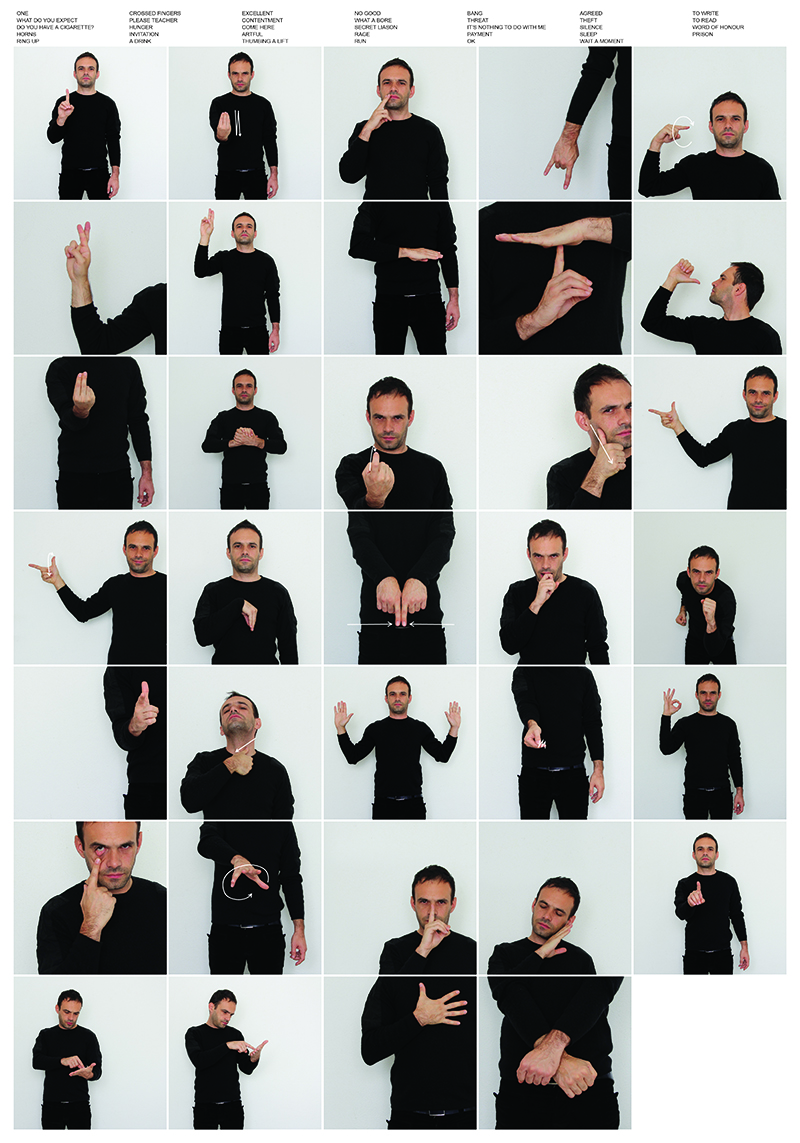
1. Sign language replaces spoken word. We can say anything we want to without opening our mouths.
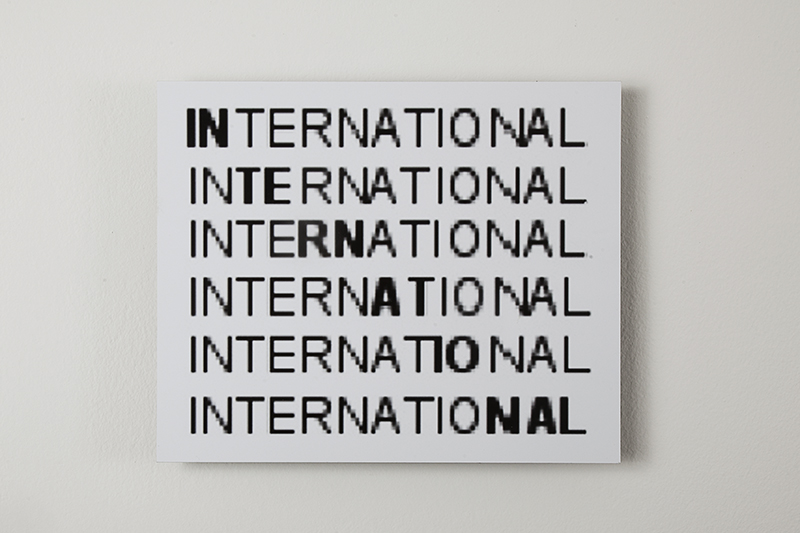
2. A distortion game with accents on the word international.
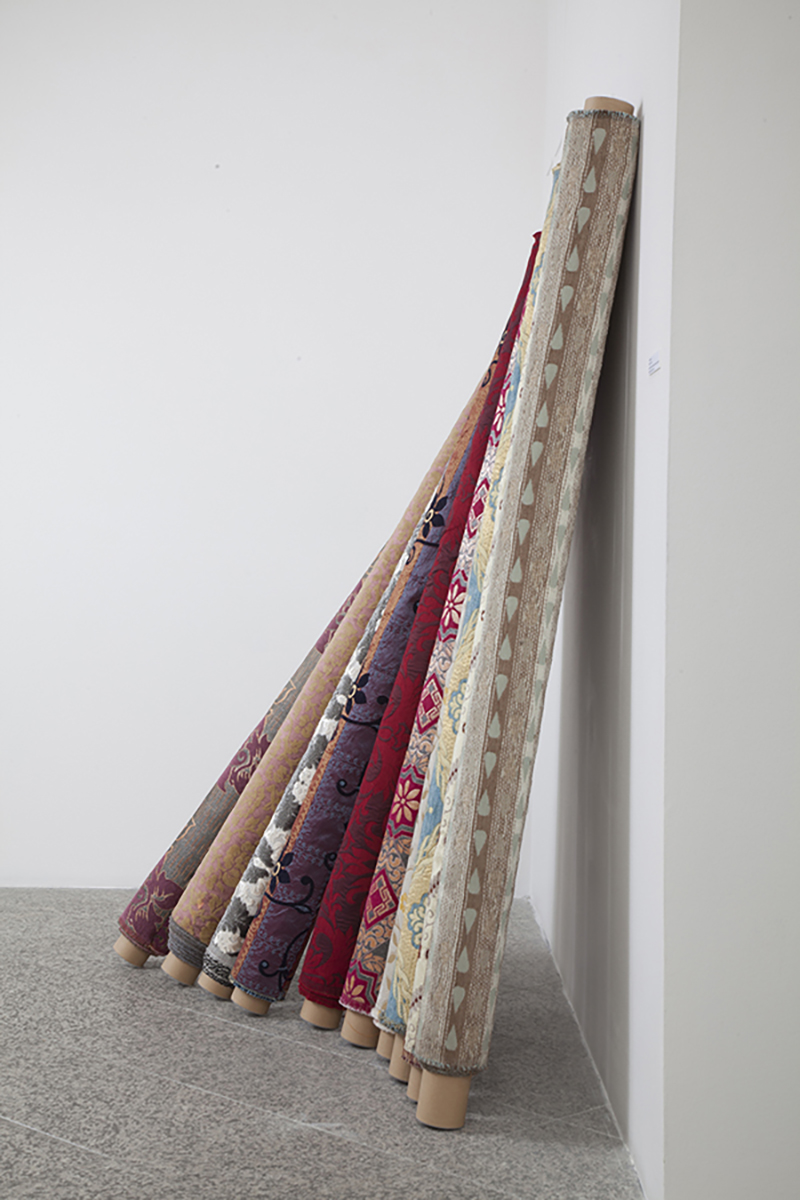
3. Inside an apartment: a pile of carpets of various patterns and textiles; a table piled with a selection of vinyl tablecloths, prints ranging from from marine themes to olive trees.
4. Movement and noise of silent animals revive an antique English sofa, with an arm wrapped in goat skin and the picture of a six legged horse on the wall.
5. The dressing ceremony overlaps and submits to the spoken word in a confusion of tongues, like scarves of a different pattern, fabric and origin that hang on the same rack.
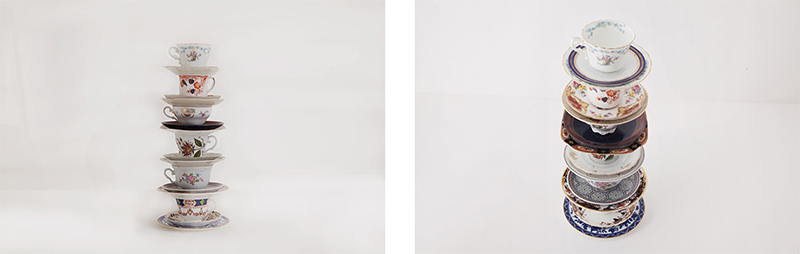
6. A hand-carved book on parrots. Scraps from a book on succulents glued together in a plexiglass case and ordered by page number. A Babel tower of china teacups and saucers. Two or more pages folded with marvelling assonance, like landscapes melting together: Here! This is my nation!
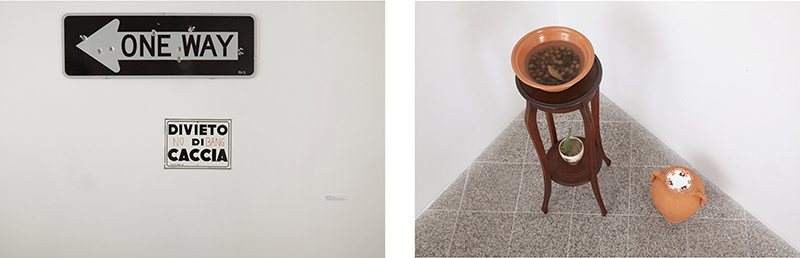
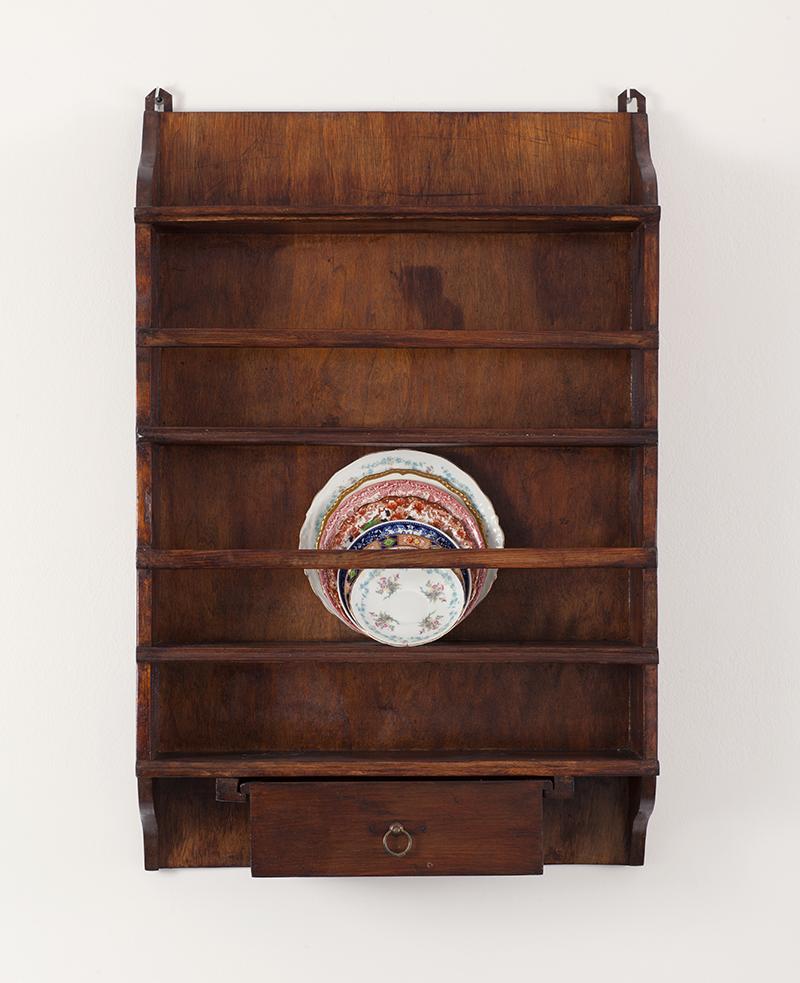
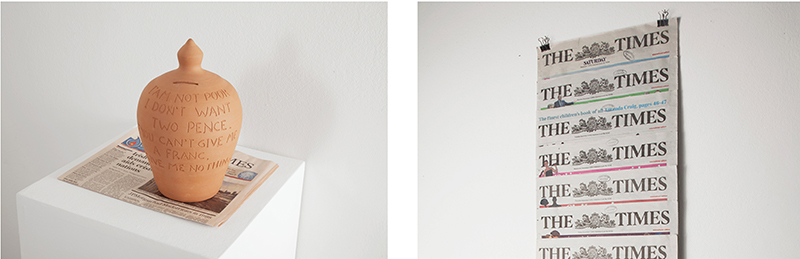
7. Oxytones bouncing back and forth in a game of ping pong. Assembled in a collage of newspaper headlines (from: The Times, The Sunday Times, The Financial Times, The New York Times), a fresco of a competitive business-run society. “One way” says a sign pockmarked with bullet holes. A fox hunt that reflects the condition of our times. A vase full of prickly pears from Ottana is sitting on an English shelf (p.s. olives are good and you can taste them!). A stack of English plates and incomplete china sets opens up like a like a corolla of a multicoloured flower.
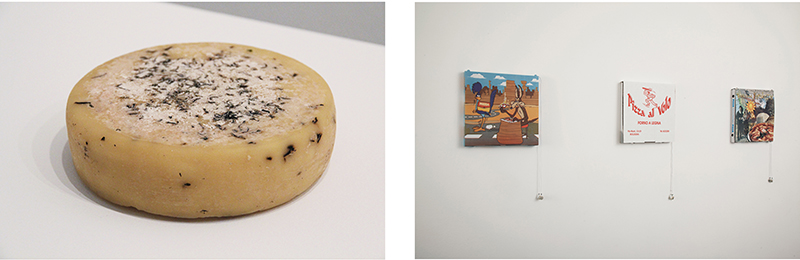
8. Compound words fitted out like a Merzbau cabinet. Pizza boxes of various design and origin transmit phone calls in broken English to pizza joints in Sardinia, Emilia and other parts of Italy. A piggy bank positioned atop The Financial Times is waiting for its coins. A quote by Florence Piercy, Benjamin’s third daughter, carved upon it: “I am not poor. I do not want two pennies. If you cannot give me a franc, then give me nothing at all”. (Personal interpretation of the current economic landscape).
9. If something is unknown, it cannot be exhibited. And indeed, it’s not there.
10. A google translation turns a weather forecast into a spell. An umbrella adorned with a dog- shaped handle made of bone yelps in different languages. Each spoken language corresponds to a different writing.
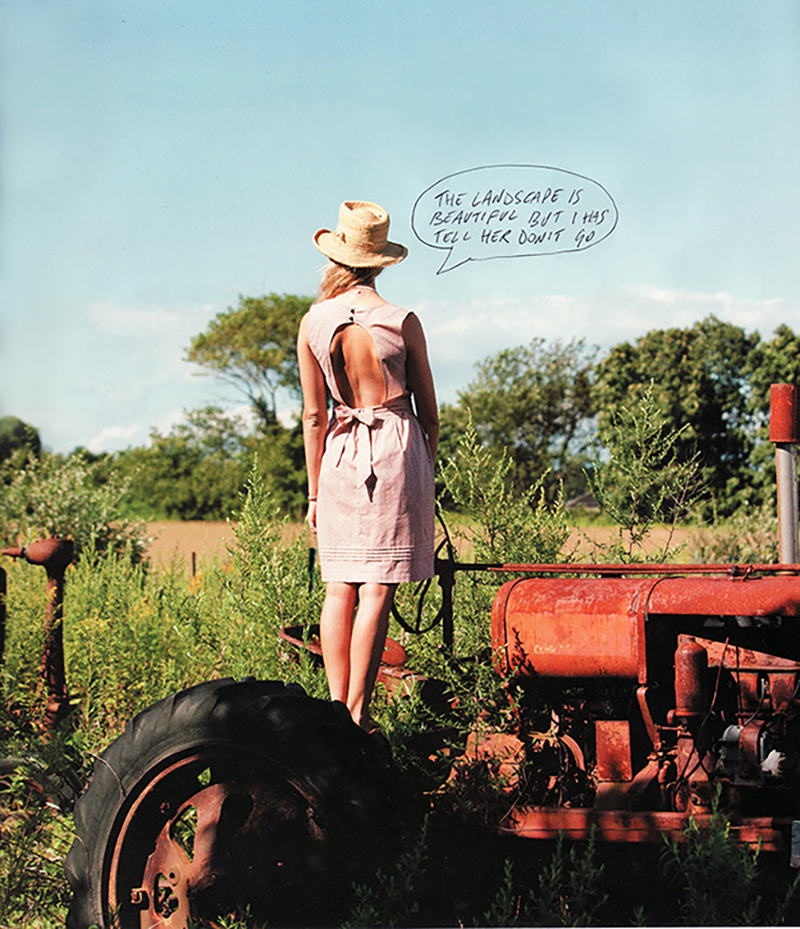
11. A non-grammatical language describes the vision of an imaginary landscape. The notes of Brian Eno’s song By This River (A tribute to Marino Formenti) accompany the performance, while De Do Do Do De Da Da Da by The Police – as a symbol of an artificial language – taints the whole exhibition.
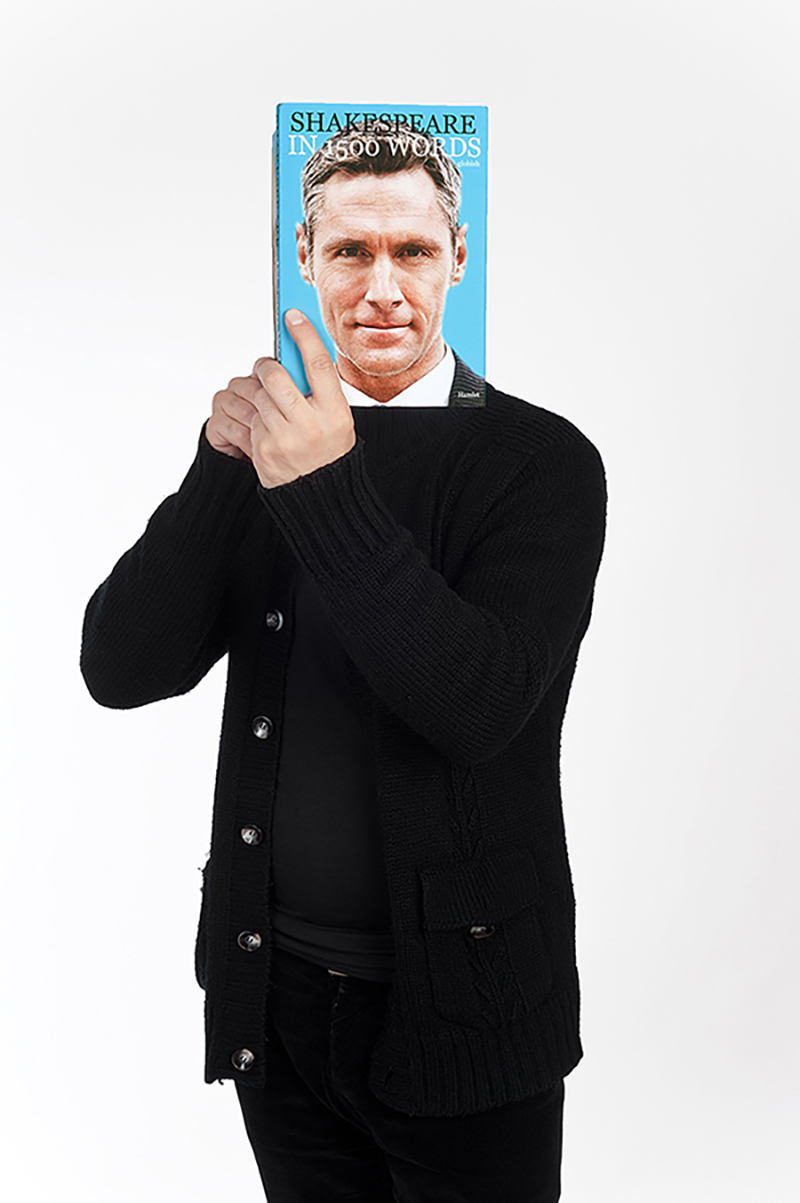
12. The simplified Globish (global English) version of Hamlet at the Global Theatre of High Finance.
13. Two upside-down English chairs support a glass top kept in balance by a page from a dictionary. The page contains the word: murder. Who killed English? The global village did.
14. A (shortened and incorrect) greeting closes the exhibition. The audience leaves the room with the exhibition program in their hands. By connecting the first letters of each word, the riddle is solved: Fuck the English (the wait for pizza delivery breaks the consequentiality of the landscapes).